
- Written by Webmestre
39e colloque international du GERAS
Colloque organisé par le Service de Traduction spécialisée et de Terminologie (TTeSLa)
Faculté de Traduction et d’Interprétation – Ecole d’Interprètes Internationaux
Université de Mons, Belgique
Les dimensions diachroniques en anglais de spécialité : enjeux communicationnels, didactiques et traductologiques
15 – 17 mars 2018
Comité organisateur/Organising committee
Prof. Christine Michaux, FTI-EII, UMONS
Prof. Michel Van der Yeught, Aix-Marseille Université
Dr. Monique Mémet, ENS Paris-Saclay
Dr. Marie-Aude Lefer, UCLouvain
Dr. Jean Robertson, Chargé de cours, FTI-EII, UMONS
Dr. Lobke Ghesquière, Chargée de cours, FTI-EII, UMONS
Charlene Meyers, assistante sous mandat, doctorante, FTI-EII, UMONS
Tiffany Jandrain, boursière de doctorat, FTI-EII, UMONS
Annick Damman, assistante temporaire, doctorante, FTI-EII, UMONS
Comité scientifique/Scientific committee
Marion Charret-Del Bove, Université Lyon 3, France
Lobke Ghesquière, UMONS, Belgique
Shaeda Isani, Université Grenoble Alpes, France
Elizabeth Lavault-Olléon,Université Grenoble Alpes, France
Marie-Aude Lefer, UCLouvain, Belgique
Monique Mémet, ENS Paris-Saclay, France
Christine Michaux, UMONS, Belgique
Philippe Millot, Université Lyon 3, France
Aurélie Picton, Université de Genève, Suisse
Ana Bocanegra Valle, Université de Cadix, Espagne
Michel Van der Yeught, Aix-Marseille Université, France
Christopher Williams, Università degli studi di Foggia, Italie
- Hits: 49891
- Written by Webmestre
39e colloque international du GERAS
15-17 mars 2018, Université de Mons, Belgique
Les dimensions diachroniques en anglais de spécialité : enjeux communicationnels, didactiques et traductologiques
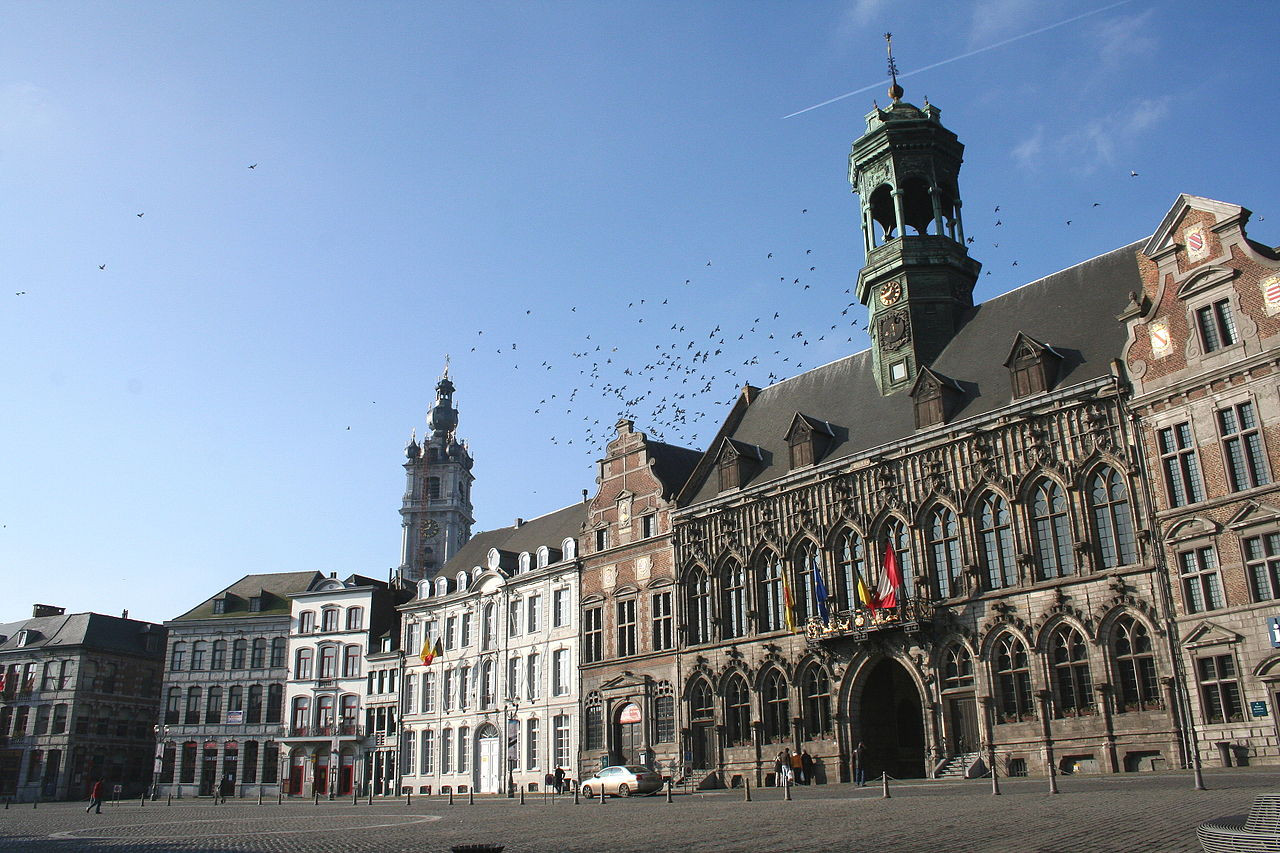
Crédit Photo Jean-Pol Grandmont
Programme du colloque
Rencontres Doctorales - jeudi 15 mars matin (organisation : Laurence Harris, Aude Labetoulle)
- Voir l'appel à communications : Appel à communications des rencontres doctorales
- Programme: voir le programme des rencontres doctorales et les abstracts des communications
- Hits: 39410
- Written by Webmestre
39th International GERAS Conference
15-17 March 2018
University of Mons, Belgium
Call for Papers
Diachronic dimensions in specialised varieties of English: implications in communications, didactics and translation studies
As a rule, practitioners of English for Specific Purposes show little interest in diachrony and, particularly, in the past of specialised languages. Their main motivation stems from learners’ needs, and needs analyses generally place them in the present or near future rather than in the past. Conversely, a growing number of researchers in continental Europe regard specialised languages as enduring linguistic objects – e.g. specialised varieties of English (SVEs) such as medical or legal English – and exploring these SVEs’ diachronic dimensions plays an increasing part in their scientific interests. This conference invites researchers to examine the diachronic dimensions of specialised English and to explore their various facets.
One first group of questions may bear on the communicational stakes of the subject. Languages aptly serve specialised communication in synchronic conditions, but what are the impacts of diachronic distantiation on comprehension and interpretation? Learners frequently engage in documentary research and they consult texts that may belong in temporal settings lying outside their immediate learning time sphere. Do they have to be made aware of the evolutions in terms, discourse, genres, institutional reference, and of the influence of history on their specialised communities? These questions expand further if the history of SVEs comes into consideration and if we wonder about their origins. Training learners to become erudite in specialised languages is clearly not an option; yet, totally ignoring the diachronic dimension of SVEs may not be an adequate posture when it comes to training qualified teachers of English irrespective of their specialised domains.
A second set of questions flows from answers given to the first. If some scientific investment in diachrony makes sense for some SVEs, how can we design learning/teaching strategies that meet the requirements of the “didactic transposition” put forward by Yves Chevallard (1985: 20)? The aim of the didactic transposition is to produce “knowledge for learners” from “scholars’ knowledge” and the challenge here is to introduce the diachronic dimension into the process. Motivation concerns are also a major issue if learners are invited to devote some time and effort to long-term aspects instead of engaging fully in hic and nunc language priorities.
The third group of interrogations concerns translation issues. Culture has long been a major object of research in translation studies (often contrasting “natural” with “exotic” translations), but diachrony seems to have attracted limited interest. Yet, translators are often challenged by source elements that have changed in the course of time such as terminological evolutions like neologisms or changes in nomenclature; modifications in phraseology resulting from usage or imposed by competent authorities; or paradigmatic changes in the truth conditions of the world, as when one scientific theory is proved wrong and is replaced by another.
In translation studies, source-oriented translation and target-oriented translation only meet part of the translators’ dilemmas when they are confronted with diachrony. The source-oriented translator would simply keep the past elements of the source text and include them in the target text while the target-oriented translator would aim at adapting past elements to make them fit the present.
Functionalist translation theories offer better strategies in these cases. Following the skopos theory, every translation has a purpose. The source text has to be translated so as to make sense for addressees, their knowledge and their needs, in the target circumstances.
In this theoretical framework, diachrony-dependent translation decisions are subject to the function of the target text. In that respect, Christiane Nord (1997) stresses that translators have to compare source texts and target texts in terms of addressees and of the medium employed, but also in terms of the place and time of reception. By comparing, translators may make translation decisions which largely determine the target text.
Functionalists have duly addressed the issue of time difference between source and target texts, but diachrony is a transversal phenomenon in translation because it is inherent in linguistic evolutions, whether in languages for general or specialised purposes. In that context, it would be of interest to study the evolutions in the translation of neologisms, of theory-constitutive metaphorical terms – their evolutions are often marked by scientific discoveries in the course of time. Other relevant prospective questions may include the translation of specialised phraseologies where parallel corpus analyses highlight diachronic markers.
References
Chevallard, Yves. 1985. La transposition didactique : du savoir savant au savoir enseigné. Grenoble: La Pensée Sauvage.
Nord, Christiane. 1997. Translating as a Purposeful Activity: Functionalist Approaches Explained. Manchester, UK: St Jerome.
Guest speakers
Elisabeth Lavault-Olléon, Université Grenoble Alpes, France
Aurélie Picton, University of Geneva, Switzerland
Submission format
Languages: French or English
Number of words: 300
Deadline: 10 January 2018
Forward to: This email address is being protected from spambots. You need JavaScript enabled to view it., This email address is being protected from spambots. You need JavaScript enabled to view it.
- Hits: 47771
- Written by Webmestre
Tarifs - Prix des numéros
Abonnements
|
|
Personne physique |
Personne morale |
Tarif réduit |
|
Abonnement (2 numéros, 1 volume imprimé par an) - France |
40€ |
60€ |
30€ |
|
Abonnement (2 numéros, 1 volume imprimé par an) - Etranger |
48€ |
68€ |
38€ |
Achat au numéro* :
|
|
France |
Etranger |
|
Du n°1 à 34** |
14 € |
18 € |
|
A partir du n°35/36 |
24 € |
28 € |
|
* Les membres du GERAS bénéficient d'une réduction de 50% sur le tarif des anciens numéros. ** Numéros épuisés : 3; 4; 23/26; 27/30. |
||
Numéro spécial, Les trente ans du GERAS, septembre 2008 : 10 € (port incl.)
Pour commander d'anciens numéros d'ASp, veuillez télécharger le bon de commande ci-dessous et le retourner, accompagné de votre règlement, à :
Télécharger le bon de commande (.pdf)
Télécharger le bon de commande (.doc)
- Hits: 17440